
Washington Park, Denver: The Ultimate Neighborhood & Visitor Guide
If you ask a local to name the absolute crown jewel of South Denver, you’re almost always going to hear one answer: “Wash Park.”
Often compared to Central Park in New York City (albeit on a smaller, more manageable scale), Washington Park is unique because it serves two distinct purposes. First, it is a 165-acre recreational haven that draws people from all over the city for volleyball, running, and paddle boating. Second, it is one of the city’s premier historic residential districts, split into two distinct neighborhoods—East and West—that flank the green space.
Whether you are looking for homes for sale in Denver or just planning a Saturday afternoon picnic, understanding the lay of the land here is essential. The vibe is a seamless blend of high-energy fitness enthusiasts, historic architecture lovers, and a touch of luxury living. Let’s break down everything you need to know about the park amenities, the real estate market, and the local hotspots that make this area so desirable.
The Park: Denver’s 165-Acre Crown Jewel
At the center of it all is the park itself. Designed in the grand tradition of the “City Beautiful” era, this space is impeccably manicured and heavily used. If you are moving to Denver, you’ll quickly learn that this is the social and fitness hub of the south side.
The layout is defined by two massive lakes, two massive flower gardens, and a loop system that sees thousands of visitors a day. Here is a breakdown of the amenities you’ll find inside:
- The Loops (Runner’s Paradise): There are two primary paths circling the park. The outer loop is a gravel path measuring approximately 2.5 miles, favored by runners looking for a softer surface. The inner loop is paved, measures about 2.2 miles, and is strictly divided for pedestrians and cyclists/wheel sets to prevent collisions.
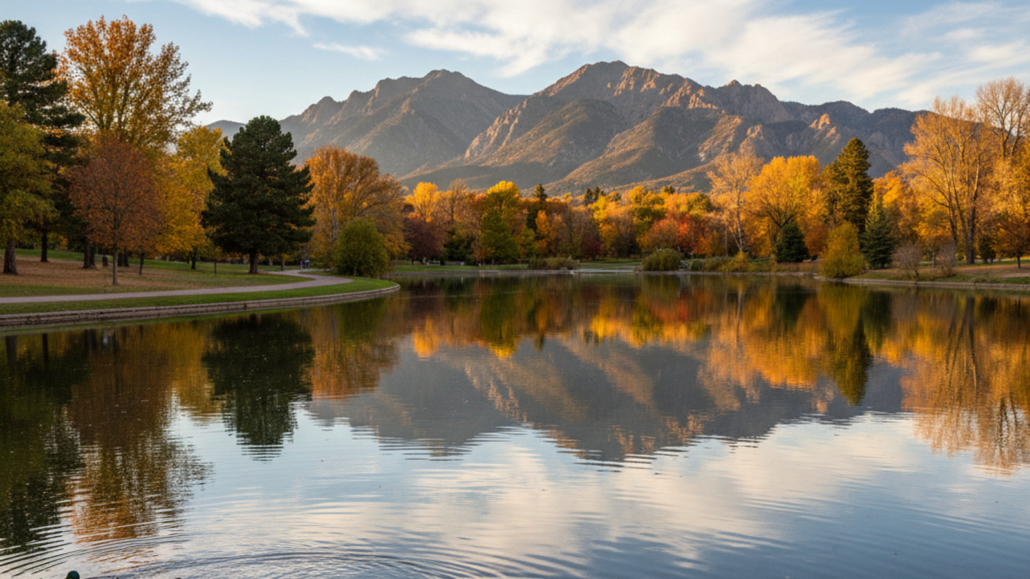
- The Lakes: The park features two lakes with very different vibes. Smith Lake (at the north end) is the social hub, home to the historic boathouse, a playground, and paddle boat rentals. Grasmere Lake (at the south end) offers a quieter, more reflective atmosphere with unbeatable mountain views.
- Gardens: You don’t have to go to the Botanic Gardens to see incredible blooms. The Mount Vernon Garden is a replica of George Washington’s gardens at Mount Vernon, while the Victorian Perennial Garden offers riots of color in the warmer months.
- Recreation Center: The Washington Park Recreation Center is the busiest in the Denver system. It features a fantastic indoor pool, a weight room, and fitness classes.
- Sports Facilities: If you want to join a league, this is the place. The park boasts 10 tennis courts, a lawn bowling green (with an active club), and vast open lawns that are taken over by volleyball nets every summer weekend.
Know Before You Go: Park Rules & Hours
Because the park is so popular, the rangers enforce rules strictly to keep things running smoothly. If you are visiting, keep these logistics in mind to avoid a ticket.
- Dog Rules: This is the most common misconception about Wash Park. Dogs must be on-leash at all times. There is no off-leash dog park inside Washington Park boundaries. If you need off-leash space, you’ll have to head to Glendale or Cherry Creek State Park.
- Hours: The park follows standard Denver Parks curfews, open from 5:00 AM to 11:00 PM.
- Alcohol Policy: You can bring 3.2% beer (canned only) and wine for picnics. Glass bottles and hard liquor are prohibited.
Living in Washington Park: East vs. West
When we talk about living in Washington Park, we are actually talking about two different neighborhoods separated by the park itself. The real estate market and the “vibe” change depending on which side of Downing Street you are on.
East Washington Park
East Washington Park (generally east of Downing Street) is characterized by a quiet, “old money” atmosphere. The streets here are wide, winding, and lined with mature trees.
Architecturally, this side is famous for the “Denver Square”—large, two-story brick homes built in the early 20th century. You will also see high-end “pop-tops” (historic homes with modern second-story additions) and luxury new builds. Because the lots tend to be larger and the streets quieter, home prices here are generally at the highest end of the Denver market, often ranging well above $1M. It feels slightly more secluded and is closely tied to the neighboring Bonnie Brae area.
Washington Park West
Historically, “Wash Park West” (west of Downing to Broadway) was the working-class counterpart to the east side. Today, it is one of the hippest, most energetic parts of town.
The architecture here is a mix of charming brick bungalows, Victorian cottages, and modern duplexes. While prices have surged over the last decade, the West side often attracts a demographic looking for a more urban energy. It is denser and offers easier walkability to the bars and restaurants on South Broadway and easy access to I-25 for commuters. If you enjoy a neighborhood where you can hear the faint hum of the city and walk to a dive bar or a trendy coffee shop, the West side is likely your speed.
Shopping & Dining: South Gaylord and South Pearl
One of the biggest perks of living in South Denver is that you don’t have to drive downtown for great food. The neighborhood is anchored by two distinct commercial districts that are walkable from most homes in the area.
Old South Gaylord Street (East Side) Located on the 1000 block of South Gaylord, this is the “Main Street” for East Wash Park residents. It has a preserved, historic village feel. You’ll find upscale dining, art galleries, and boutiques. It’s also the community hub for events; the Memorial Day Weekend Festival here is a massive local tradition that kicks off the summer.
South Pearl Street (West Side/Platt Park Border) Just a few blocks west of the park, South Pearl Street offers an eclectic mix of shops and dining. It is home to the Sushi Den (widely considered one of the best sushi spots in the country) and hosts one of the best Farmers Markets in Denver every Sunday from May through November. The vibe here is bustling, trendy, and incredibly pedestrian-friendly.
History & Heritage: Since 1899
Part of what keeps property values high and interest steady in this area is the deep sense of history. The park wasn’t an accident; it was a masterpiece of urban planning.
Originally designed by German architect Reinhard Schuetze in 1899, the park was heavily influenced by the “City Beautiful” movement, which aimed to introduce grandeur and moral order to urban centers. Schuetze is responsible for the layout of the lakes and the grand, tree-lined carriage paths.
The neighborhood also has a quirky connection to the Titanic. The “Unsinkable” Molly Brown purchased the cottage of writer Eugene Field to save it from demolition and had it moved to the edge of the park, where it still stands today. Perhaps the most recognizable structure, however, is the Boat House facing Smith Lake. Built in 1913 in the Italianate style, it was recently restored and serves as a stunning backdrop for weddings and photos. In 2012, the American Planning Association designated Washington Park as one of the “Great Public Spaces in America,” cementing its legacy.
Washington Park Neighborhood FAQ
Are dogs allowed off-leash in Washington Park?
No. This is strictly enforced. Dogs must be on a leash at all times within the park. The open lawns can be tempting, but rangers patrol frequently. For off-leash play, locals usually head to the designated dog parks in nearby neighborhoods.
What is the difference between Wash Park West and East?
The main difference is the lot size and architectural style. East Washington Park features larger lots, winding streets, and grand brick Denver Squares. Washington Park West is denser, with a grid layout, smaller bungalows, and a closer proximity to the nightlife on South Broadway.
Where do you park for Washington Park?
Parking can be competitive on weekends. There are small parking lots inside the park near the rec center and the boathouse. Most visitors utilize street parking along Downing Street, Franklin Street, or Louisiana Avenue. If you park on the residential side streets, be sure to check signs for permit restrictions to avoid towing.
How long is the loop around Wash Park?
It depends on which path you take. The outer gravel path is approximately 2.5 miles long, while the inner paved road is about 2.2 miles. Both are flat and fast, making them favorites for Denver runners.
Does Wash Park have a pool?
Yes. The Washington Park Recreation Center, located inside the park, has an indoor pool with lap lanes and leisure areas. There is also a splash pad near the playground for cooling off during the summer months.