
Denver vs Castle Rock CO: Navigating Front Range Real Estate in 2026
Choosing where to buy a home along the Colorado Front Range often comes down to balancing urban proximity with suburban expansion. Buyers looking at Denver vs Castle Rock CO face a distinct choice between high-density city living and master-planned community space. Both areas operate within the broader regional market, but they deliver fundamentally different daily experiences and housing styles.
The 2026 housing landscape requires a sharp look at how your budget aligns with your lifestyle requirements. While Denver offers immediate access to major employment hubs and cultural districts, Castle Rock provides larger lot sizes and expanding local infrastructure about 28 miles to the south. Understanding the specific trade-offs in commute times, property taxes, and median prices will dictate which location makes financial sense for your next move.
Real Estate Market Comparison: Denver and Castle Rock
Denver and Castle Rock share the same overarching economic health of the CO region, yet they offer entirely different housing products. The core city features an established, densely packed inventory where buyers pay a premium for location over square footage. Moving south into Douglas County trades that immediate urban access for newer construction and significantly larger footprints.
Overall cost of living differences heavily influence buyer decisions in today’s market. When analyzing the data, buyers frequently realize that choosing Castle Rock over Denver is rarely about finding a cheaper home. It is almost always a calculated decision to maximize interior living space and secure a private yard, even if the total purchase price stretches higher.
Comparing Median Home Prices
As of early 2026, Denver maintains a median home price hovering around $580,000. This figure heavily factors in the massive volume of condos, townhomes, and smaller historic properties sold within the city limits. Buyers looking strictly at single-family detached homes in Denver will quickly find entry points pushing well above that median.
Castle Rock presents a contrasting financial picture with a median price of approximately $660,000. This higher baseline directly reflects the suburban inventory, which consists largely of expansive single-family homes rather than compact attached units. Buyers simply get more physical house for their money in Castle Rock, driving the median transaction value higher than the urban core.
Property Types and Lot Sizes
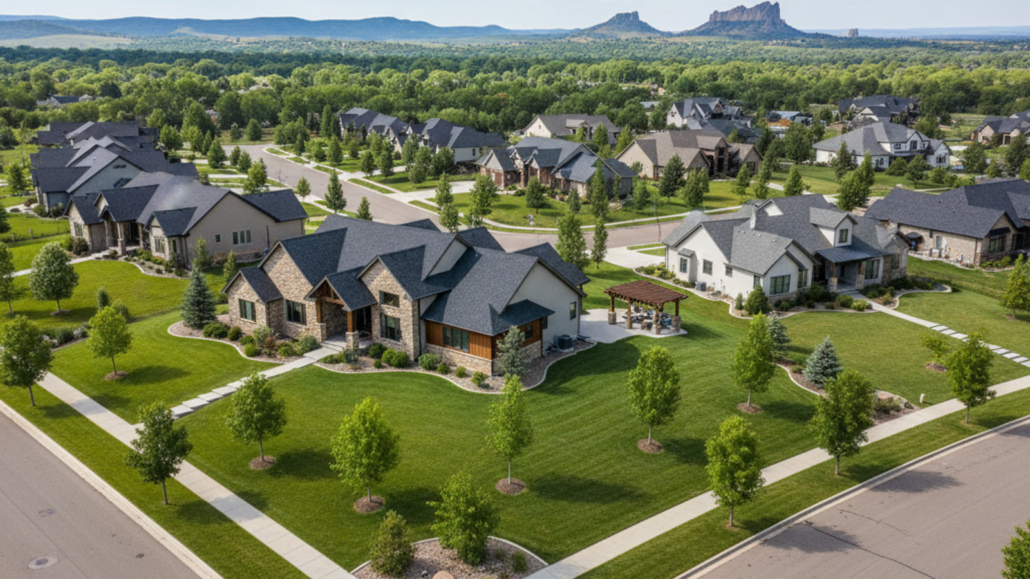
The architectural landscape shifts dramatically as you travel south along I-25. Denver inventory relies heavily on attached housing and historic brick bungalows situated on compact lots. Conversely, Castle Rock focuses on master-planned communities featuring modern builds with substantial yard space.
The physical differences between these two markets require buyers to prioritize their preferences. Denver properties frequently feature shared walls, minimal exterior maintenance, and immediate walkability to commercial districts. Castle Rock developments emphasize multi-car garages, expansive private backyards, and neighborhood trail connectivity.
Urban lots in Denver rarely exceed 6,000 square feet. Meanwhile, suburban parcels in Castle Rock routinely offer a quarter-acre or more.
Understanding Property Taxes and HOA Fees
Local tax assessments play a massive role in determining your actual monthly mortgage payment. Colorado maintains relatively low property tax rates compared to the national average, making homeownership slightly more manageable from a recurring cost perspective. The 2026 residential assessment rate sits at 6.8%, establishing a steady baseline for calculating annual obligations across the state.
The financial trade-off between these two locations comes down to balancing municipal taxes against neighborhood association costs. Buyers frequently assume moving to the suburbs automatically lowers their monthly expenses due to favorable county tax structures. However, the mandatory fees associated with master-planned communities often consume those tax savings entirely.
Douglas County vs Denver County Taxes
Denver County assesses an effective property tax rate of approximately 0.48%. This slightly higher municipal rate helps fund the extensive urban infrastructure, public transit systems, and dense utility networks required to maintain the city core.
Douglas County offers a lower effective tax rate of approximately 0.42%, which initially looks like a clear financial win for Castle Rock buyers. However, nearly all newer developments in Castle Rock mandate monthly HOA fees ranging from $100 to $200. These recurring association dues cover community pools, private trash collection, and trail maintenance, effectively equalizing the overall carrying costs between the two counties.
Commute Times from Castle Rock to Denver
Commuting costs and worsening traffic remain primary hurdles for buyers eyeing the southern suburbs. Castle Rock sits roughly 28 miles south of the Denver metro area, creating a substantial daily driving requirement for those working in the city. Navigating this corridor requires reliable transportation and a solid tolerance for highway congestion.
The rise of remote and hybrid work schedules has made Castle Rock a much more viable option for modern professionals. Commuting two days a week is vastly different from a daily grind up the interstate. Buyers who secure flexible office arrangements often find the suburban expansion well worth the occasional highway delay.
I-25 Traffic Patterns to the Denver Tech Center
The drive from Castle Rock to the Denver Tech Center typically takes 25 to 40 minutes during standard morning hours. This stretch of I-25 experiences heavy volume, but the relatively direct route keeps the DTC highly accessible for suburban residents.
Pushing further north into Downtown Denver significantly alters the equation. Commuters heading to the central business district should expect 40 to 60 minutes behind the wheel, with delays easily pushing past an hour during winter weather. Drivers frequently utilize toll options like C-470 and E-470 to bypass the worst congestion, though this adds a recurring expense to the weekly commute.
Local Amenities and Outdoor Recreation
The lifestyle difference between these municipalities highlights the classic contrast between urban convenience and suburban outdoor access. Denver delivers high-density entertainment, where residents can walk to coffee shops, music venues, and neighborhood restaurants. Castle Rock spreads its amenities out, focusing heavily on open space, community centers, and large-scale retail complexes.
Quality of life factors ultimately drive buyers toward one location or the other based on how they spend their weekends. Denver provides immediate cultural immersion, while Castle Rock offers unparalleled proximity to the Rocky Mountains and Palmer Divide. If immediate access to hiking trails outweighs the need for a bustling nightlife, Castle Rock presents a clear advantage.
Denver’s Urban Core vs Castle Rock’s Natural Spaces
The daily environment in each city caters to entirely different recreational preferences. Buyers must decide if they prefer paved city sidewalks or rugged elevation gains right outside their front door.
The specific amenities available highlight this stark regional contrast:
- Denver features extensive independent dining scenes, professional sports venues, and dense arts districts.
- Castle Rock boasts 75 miles of local trail systems, Philip S. Miller Park, and nearby Castlewood Canyon State Park.
- Urban residents utilize structured city parks, while suburban residents lean heavily into expansive open spaces.
The pace of life naturally slows down as you leave the city limits. Denver maintains a constant, energetic hum typical of a major metropolitan hub. Castle Rock provides a quieter, recreation-focused environment that prioritizes outdoor space over commercial density.
Educational Infrastructure
Public school systems are a major consideration for buyers evaluating long-term property investments. The boundaries of the school districts serving each municipality are distinct and operate under different assignment models. Understanding how these districts function is crucial for predicting future property values and neighborhood demand.
Buyers must look beyond general city boundaries and focus on specific address assignments. A home’s exact location dictates its feeder pattern, which can vary wildly even within the same zip code. Verifying specific neighborhood school assignments is a mandatory step before submitting any real estate offer in either market.
Douglas County School District vs Denver Public Schools
Castle Rock is entirely served by the Douglas County School District. This centralized district manages the suburban population through a traditional neighborhood feeder system, relying heavily on localized elementary and middle schools that funnel into large comprehensive high schools.
Denver is served by Denver Public Schools, which utilizes a highly varied neighborhood and magnet system. The urban district offers extensive school-choice programs, specialized academies, and charter options. This complex infrastructure requires parents to actively navigate enrollment windows and lottery systems to secure their preferred placements.
Frequently Asked Questions
Is it cheaper to live in Castle Rock or Denver?
Overall living expenses are fairly comparable, but the costs are distributed differently across the two locations. Castle Rock features higher median home prices due to larger square footage, while Denver demands a premium for daily conveniences and municipal taxes. Buyers typically spend similar amounts but receive completely different lifestyles.
What is the average commute time from Castle Rock to Denver?
Driving from Castle Rock to Downtown Denver typically takes 40 to 60 minutes during peak morning traffic. The commute to the closer Denver Tech Center averages 25 to 40 minutes along the I-25 corridor. Utilizing toll roads can reduce these times but adds a recurring daily expense.
Are housing costs cheaper in Castle Rock or Denver?
Denver offers a lower median home price around $580,000, largely due to its high volume of compact condos and townhomes. Castle Rock has a higher median price near $660,000 because the inventory consists predominantly of large, single-family homes. You will pay more total dollars in Castle Rock, but you acquire significantly more square footage.