
The Truth About Your Denver Home’s Value in 2026
If you are a homeowner in the Mile High City, opening your mail (or your inbox) lately has likely been a confusing experience. It is January 2026. The frenzied pandemic boom is firmly in the rearview mirror, and our local market has settled into a cooler, more stabilized rhythm.
Yet, the numbers you see attached to your property probably don’t match up. Your tax bill says one thing, your favorite real estate app says another, and your neighbor who just sold his place is boasting about a third figure entirely.
Here is the reality: Denver’s median price has seen a slight correction, hovering around the $575,000 to $585,000 range depending on the neighborhood. But that average doesn’t tell the whole story of your specific home. Understanding exactly what your property is worth right now—not what it was worth two years ago—is critical, whether you are planning a move, looking to remove PMI, or just trying to make sense of your property taxes and seller closing costs.
3 Ways to Value Property in Denver (And Which to Trust)
Not all home value estimates are created equal. Depending on who you ask, the value of a bungalow in the Highlands can swing by tens of thousands of dollars. Generally, valuation methods fall into three tiers of accuracy.
Tier 1: Automated Valuation Models (AVMs)
These are the numbers you see on Zillow, Redfin, or generic bank websites. They are fast, fun to look at, and often flawed. In Denver, algorithms struggle because our housing stock is incredibly mixed. An algorithm has a hard time distinguishing between a fully popped-top, modern renovation and the original 1950s ranch right next door. It sees them on the same block and assumes they are similar, leading to estimates that can be off by significant margins.
Tier 2: Comparative Market Analysis (CMA)
This is what a local agent puts together for you. Unlike an algorithm, a human agent walks through your home. We adjust for the view, the condition of your hardwood floors, and the specific vibe of the street. A CMA looks at active competition and recent sales, adjusting for the nuances that software misses.
Tier 3: Professional Appraisal
This is the bank’s gold standard. If you are refinancing or selling to a buyer with a mortgage, this is the number that counts. Appraisers are licensed professionals who offer the most conservative valuation. It usually costs $500 or more and involves a strict, regulated process.
Denver-Specific Factors That Swing Home Values
When we talk about the current Denver real estate market trends, we have to look beyond square footage and bedroom counts. There are local quirks that buyers here are willing to pay a premium for—quirks that don’t always show up on a spreadsheet.
Neighborhood Micro-Climates Denver is not a monolith. While the overall market might be flat or slightly down, specific pockets like Cherry Creek or Wash Park often appreciate even when the rest of the city cools. Conversely, up-and-coming areas like Athmar Park or Clayton can experience sharper corrections when interest rates remain elevated.
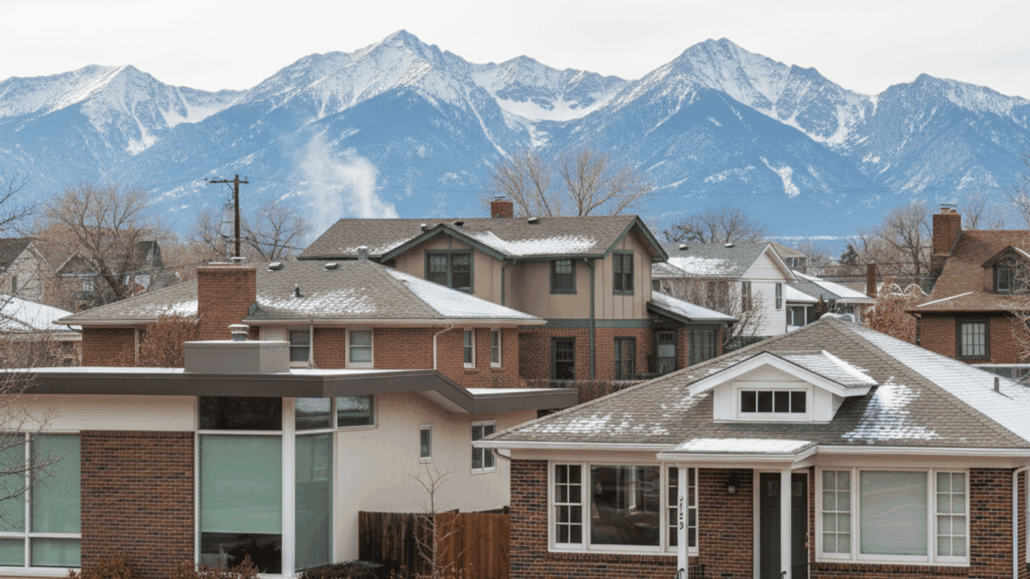
The “Mountain View” Premium In many cities, a view is nice. In Denver, a clear, unobstructed view of the Front Range is a tangible financial asset. A home that looks out at the peaks will consistently appraise and sell your home for more than the identical floor plan across the street that looks at a fence.
Zoning and Density Potential With the city’s push for density, zoning matters more than ever. Properties zoned for an ADU (Accessory Dwelling Unit) carry significant extra value. Investors and savvy homeowners pay more for the option to build a carriage house or rental unit in the back, especially in Denver proper.
Architectural Era Buyers here have a soft spot for history. A “Denver Square” or a genuine Mid-Century Modern home often commands a higher price per square foot than a generic 1990s build, largely due to the character and build quality associated with those eras.
Assessed Value vs. Market Value: Understanding Your 2026 Tax Bill
This is the most common source of frustration we see at the start of the year. You might look at your 2026 tax bill and think, “My house isn’t worth this much anymore!”
Here is why that happens. Property tax assessment in Denver is always looking backward. The taxes you are paying in 2026 are based on the 2025 assessment cycle. But here is the kicker: the 2025 value was locked in using sales data from January 1, 2023, to June 30, 2024.
That means your tax bill is based on what your home was worth nearly two years ago. If market values dipped in late 2024 or 2025, your tax assessment might actually be higher than your current market value.
It is also important to remember the math. The county assigns an “Actual Value” (what they think it would sell for) and then multiplies that by the assessment rate (hovering around 6.7%) to get your “Assessed Value.” You are taxed on the Assessed Value, not the full market price.
How 2025-2026 Market Trends Impact Your Number
So, where do we stand right now? As we move further into 2026, the frenzy of the early 2020s has been replaced by a more balanced, albeit pickier, market.
Inventory and Days on Market We are seeing homes sit on the market a little longer—median Days on Market (DOM) is currently hovering around 38–45 days. This signals that buyers are taking their time. They have more options, which means sellers cannot “test the market” with an inflated price and expect a bidding war.
The End of the Appraisal Gap A few years ago, buyers were routinely paying $50,000 over appraisal value just to win a house. That is largely a thing of the past. In the current climate, if a home doesn’t appraise, the buyer will likely ask you to lower the price or they will walk away. Accurate pricing is the only way to get a deal to the closing table.
Proven Ways to Increase Property Value in Denver
If you are thinking about listing your property or just want to build equity, focus on projects that matter to Coloradans.
- Smart Curb Appeal (Xeriscaping): Green grass is getting harder and more expensive to maintain. A well-designed, low-water landscape (xeriscaping) using native plants is not just eco-friendly; it is a major selling point for buyers who don’t want a high water bill.
- The Basement Factor: Finishing a basement is one of the best ways to add functional space. However, be aware that appraisers usually value below-grade square footage at a lower rate than above-grade space. It adds value, but not at the same dollar-for-dollar rate as a second-story addition.
- Vital Systems: In 2026, buyers are hyper-aware of inspection pitfalls. Two things can kill a deal fast: an old sewer line (many older Denver homes still have clay pipes) and an old roof. Replacing a sewer line or putting on a hail-resistant roof protects your value more than a kitchen remodel in many cases.
Frequently Asked Questions
How accurate are Zillow estimates for Denver homes?
Zestimates are generally accurate within a range of about 2-5% for standard homes listed on the market. However, for off-market homes or properties with unique features (like a pop-top renovation or a finished basement), the error rate can be significantly higher because the algorithm cannot “see” inside the house.
Why is my Denver tax assessment different from my appraisal?
Your tax assessment relies on mass data collected from an 18-month window that ended on June 30, 2024. An appraisal typically uses comparable sales from the last 3 to 6 months. Because the tax data is older, it may not reflect recent market cooling or corrections.
Does a finished basement count toward square footage in Denver?
Yes and no. It counts toward the “Total Living Area,” which buyers love. However, for valuation purposes, the square footage below ground is almost always calculated separately and valued at a lower price per square foot than the square footage above ground.
How often are Denver properties reassessed for taxes?
Colorado counties reassess property values every two years in odd-numbered years. The assessment you received in 2025 determines your taxes for 2025 (payable in 2026) and usually 2026 (payable in 2027), unless you make significant changes to the property.